Article Credit: Capital B News
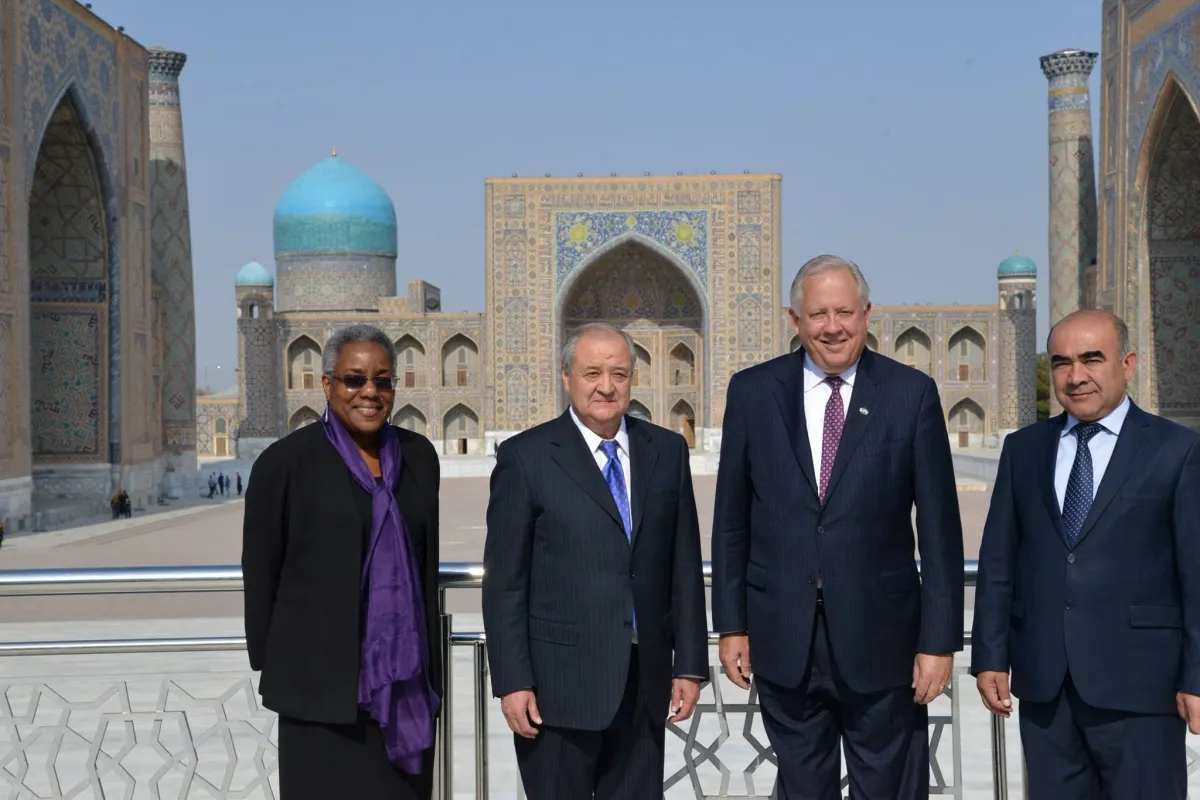
Featured Image Information/Credit: U.S. Ambassador Pamela Spratlen poses for a photo during a visit to Samarkand, Uzbekistan, in 2016. (Embassy of the United States in Tashkent/Anadolu Agency/Getty Images)
The policy is part of a wider pattern that sends a troubling signal about who is — and is not — valued in the Foreign Service, some say.
Pamela L. Spratlen knows all too well how elusive diversity has long been within the U.S. Foreign Service.
Her father, as a young man, applied to join the Foreign Service. But this was in the 1950s, at the height of Jim Crow, and racially discriminatory federal hiring policies shut that door. He went on instead to make history as the first Black faculty member at Western Washington State College, now Western Washington University.
Over the past half century, the U.S. Department of State — the primary steward of the Foreign Service — has sought to expand the ranks of the country’s diplomatic corps through programs and fellowships that weren’t yet offered when Spratlen was navigating the entry process in the late 1980s. But that commitment to diversity is now in doubt.
The Trump administration in December recalled nearly 30 career diplomats from their ambassadorial posts; at least two are Black, according to a Capital B analysis. Those affected were instructed to vacate their posts by the middle of January. Because Black Americans have long been underrepresented in ambassadorial roles, these recalls stand out beyond routine personnel changes.